
ATAL Tinkering Lab (ATL) Setup for Schools
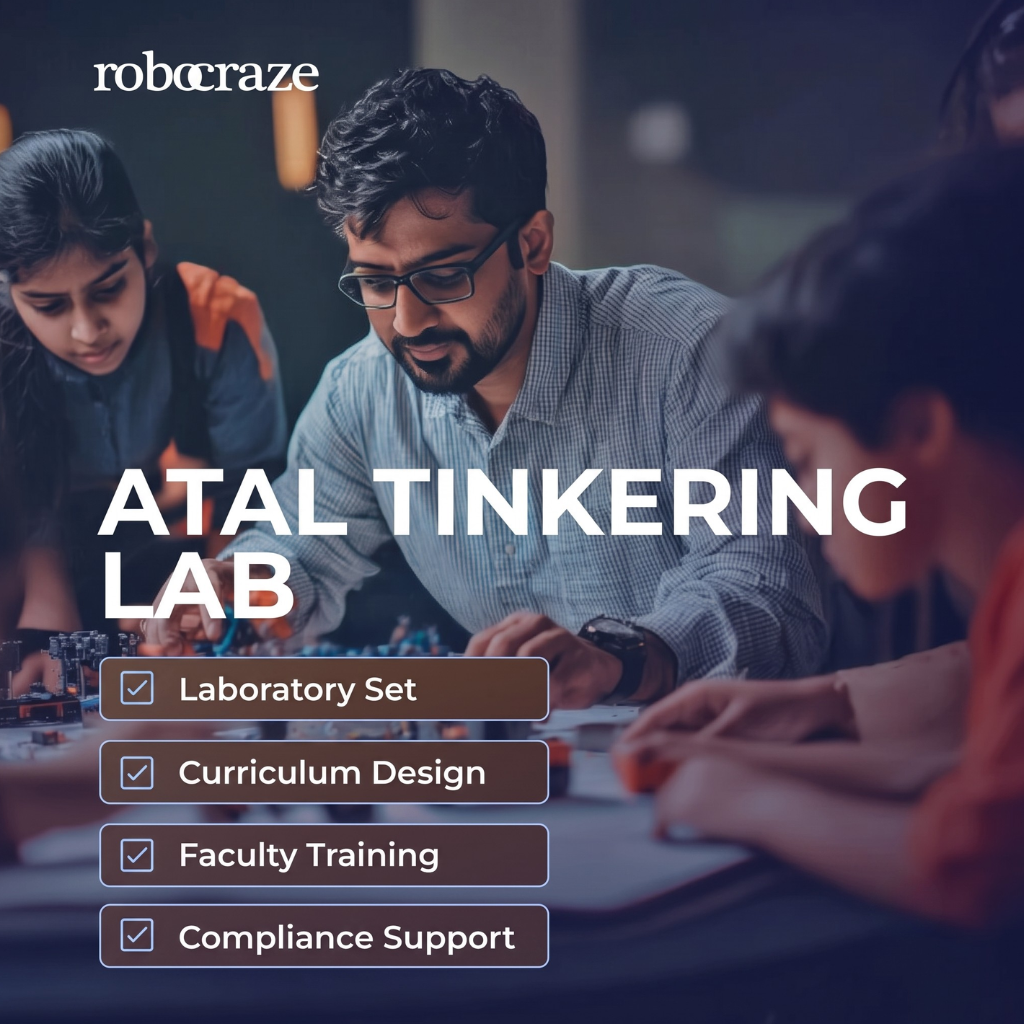
As a trusted ATL vendor India and authorized ATL lab GEM vendor, we specialize in end-to-end ATAL Tinkering Lab setup for schools. Get the complete Atal Tinkering Lab equipment list—from 3D printers to robotics—tailored for your Atal Innovation Mission lab setup to turn students into young inventors.
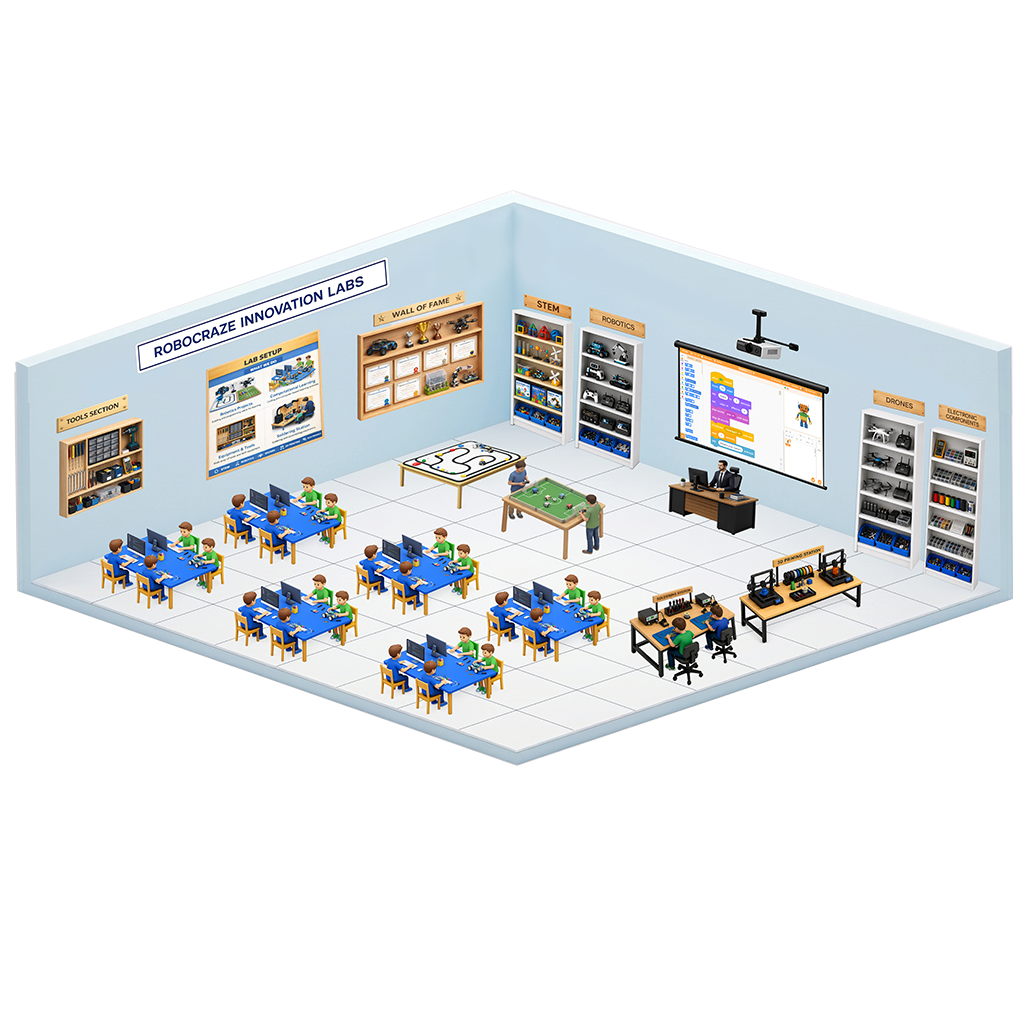
KEY FEATURES OF ATAL TINKERING LAB
Hands-On Experience
Students gain enhanced hands-on experience, learning by doing, and even product visualization, bridging the gap between theoretical knowledge and practical application.
Comprehensive Skill Development
The Lab equips students with essential 21st-century skills, including Critical Thinking, Problem Solving, Design Thinking, Collaboration, Communication, Lifelong Learning.
Innovative Learning Environment
As a common facility within the institution, the Lab promotes an innovative learning environment that encourages students to think outside the box and develop creative solutions.
Idea to Prototype
A dynamic workspace where young minds can tinker, explore, and create real-world scientific models. Access DIY kits, electronics, and 3D printers to bring imaginative concepts to life.
Educational Model
A foundational step in fostering scientific temper and innovation at the school level. It acts as a guiding model for schools to cultivate a culture of hands-on learning and curiosity.
Transform Engineering Education with Atal Tinkering Labs
Atal Tinkering Labs make learning more practical and fun. They help students build skills like creativity, problem-solving, and teamwork. Aligned with NEP 2020, they empower students and faculty to ENGAGE, EXPLORE, EXPERIENCE, EXPRESS, and EXCEL.
Contact Our Lab Experts For Free Consultation
Get in touch with our specialist consultants for personalized design guidance.
Vasavi P
Lab Setup SpecialistTreeza George
Education SpecialistFunding & Application Details
Everything you need to know about setting up this lab through institutional grants and subsidies.
Grant Amount
Up to ₹20 Lakhs (₹10 Lakhs for establishment + ₹10 Lakhs for operational expenses over 5 years).
Application Window
Typically opens annually between July and September (subject to NITI Aayog announcements).
Eligibility Criteria
Recognized schools (Grade 6-10) managed by Government, local bodies, or private trusts with dedicated built-up space.
How We Help
We provide end-to-end support—from drafting the application and compliance documentation to final lab installation and utilization reports.
Lab Activities
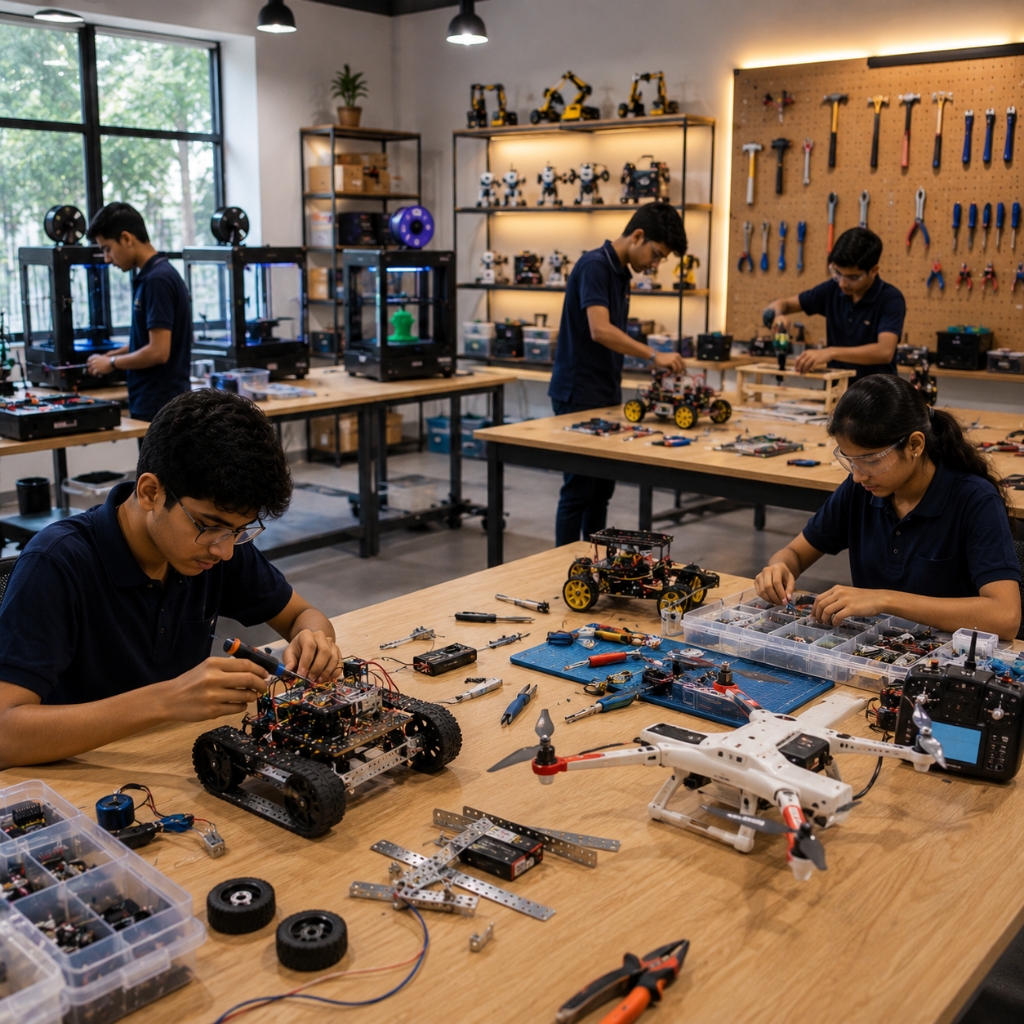
- Put together flying drones from scratch and learn how to control them safely.
- Type computer code to make a robot arm pick up and move small blocks.
- Watch a 3D printer slowly build a custom plastic toy they designed.
- Use a soldering iron to connect wires and build a blinking light board.
- Work together on large tables to measure, cut, and screw pieces of wood.
- Participate in school science fairs using the cool gadgets they made in the lab.
Real Tools
Build From Scratch
ATAL Tinkering Lab Requirements
Comprehensive guidelines and mandatory requirements for setting up and operating an Atal Tinkering Lab.
Lab Infrastructure
According to guidelines, ATL requires a minimum dedicated space of 1500 sq. ft. (1000 sq. ft. for hilly/island regions).
- Spacious environment for hands-on STEM learning.
- Basic infrastructure like science lab equipment and library.
- Proper furnishing, workstations, and stable internet connection.
- Safety equipment and standard operating procedures.
Operational Requirements
Requirements extend beyond physical space. ATLs are funded by NITI Aayog (Govt of India).
- Must be a registered school from grade VI to XII.
- Minimum enrollment of 250 students (150 for hilly areas).
- Requires a dedicated ATL in-charge teacher.
- Must organize workshops, training, and competitions.
Product & Equipment
Comprehensive inventory (P1 to P4 packages) designed to deeply support STEM education.
- P1 (Electronics): Microcontrollers, sensors, actuators.
- P2 (Prototyping): 3D printer, filament, and mechanical tools.
- P3 (IoT & Sensors): Drone kits, advanced electronics.
- P4 (Consumables): Wires, batteries, and safety gear.
Events and Activities We Support
Comprehensive programs and activities designed specifically for Atal Tinkering Labs.
Tinkering Workshops
Hands-on sessions to build foundational STEM skills.
Summer/Winter Boot Camps
Intensive camps for deep-dive learning and projects.
Hackathons & Ideathons
Competitive events to solve real-world problems.
Student Innovator Programs
Long-term projects for dedicated student innovators.
ATL Community Days
Engaging the local community with STEM activities.
Mentorship Sessions
Expert guidance and feedback for student projects.
STEM Exhibitions & Fests
Showcasing student innovations and working models.
Teacher Training Programs
Upskilling educators to effectively lead the ATL.