
IoT Lab Setup for Schools and Colleges
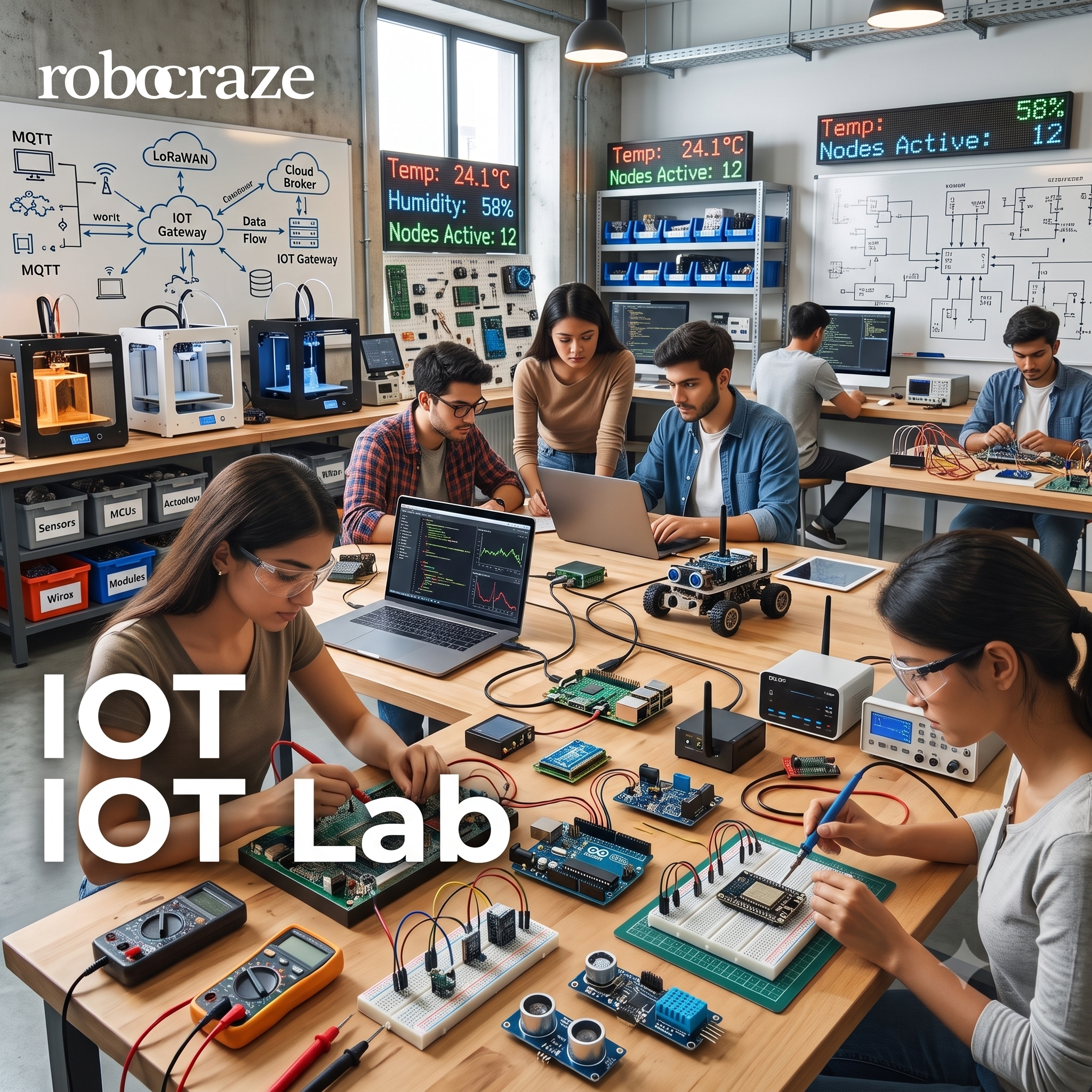
We provide comprehensive IoT lab setup for schools and advanced internet of things lab college infrastructure. From sensor kits to complete networking setups, we offer the most comprehensive IoT lab equipment list India to help students build smart gadgets and connected machines.
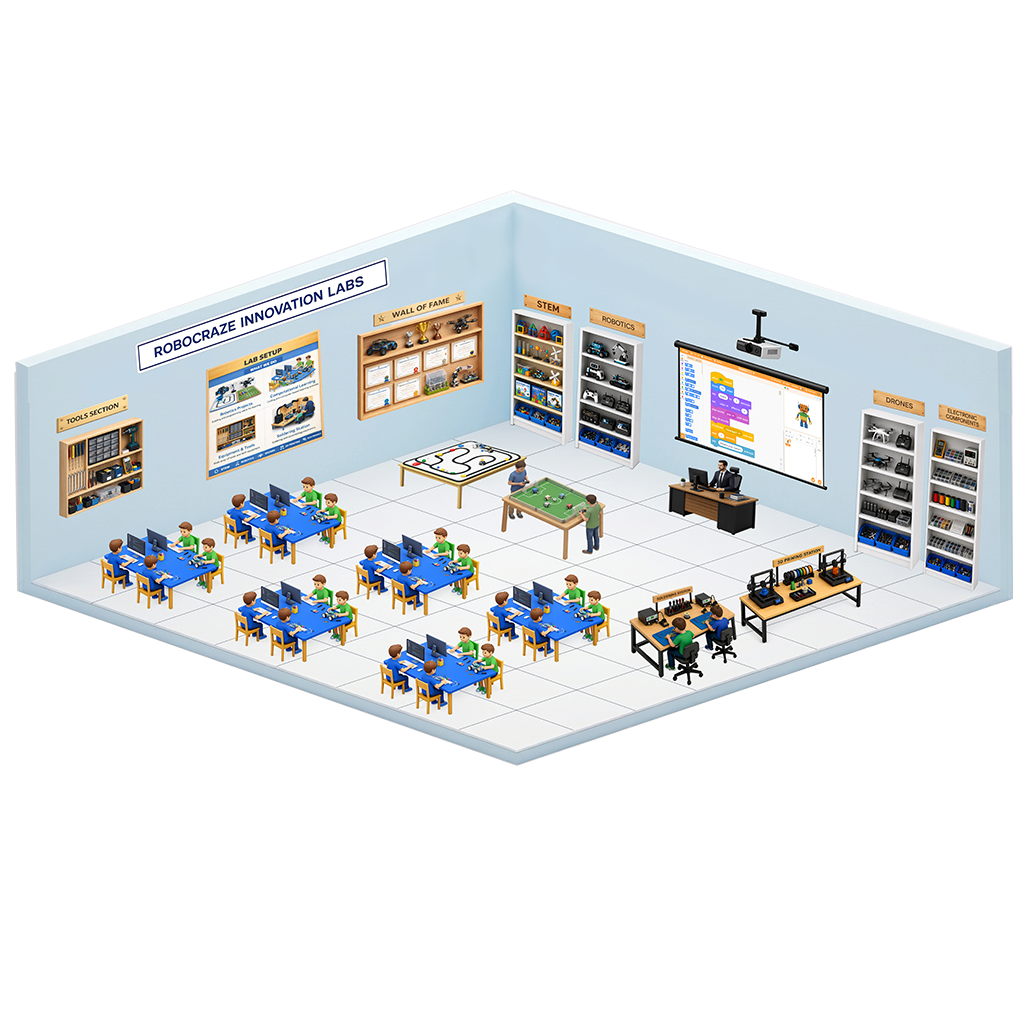
KEY FEATURES OF IOT LAB
Hands-On Experience
Students gain enhanced hands-on experience, learning by doing, and even product visualization, bridging the gap between theoretical knowledge and practical application.
Comprehensive Skill Development
The Lab equips students with essential 21st-century skills, including Critical Thinking, Problem Solving, Design Thinking, Collaboration, Communication, Lifelong Learning.
Innovative Learning Environment
As a common facility within the institution, the Lab promotes an innovative learning environment that encourages students to think outside the box and develop creative solutions.
Idea to Prototype
Bridge the physical and digital worlds by prototyping smart, connected devices. Utilize comprehensive sensor kits and cloud integration platforms to build fully functional IoT ecosystems.
Educational Model
A forward-thinking approach to teaching connected technologies and networking. It serves as an adaptable model for colleges preparing students for the smart industry revolution.
Transform Engineering Education with IoT Labs
IoT Labs make learning more practical and fun. They help students build skills like creativity, problem-solving, and teamwork. Aligned with NEP 2020, they empower students and faculty to ENGAGE, EXPLORE, EXPERIENCE, EXPRESS, and EXCEL.
Contact Our Lab Experts For Free Consultation
Get in touch with our specialist consultants for personalized design guidance.
Vasavi P
Lab Setup SpecialistTreeza George
Education SpecialistLab Activities
- Plug moisture sensors into dirt to measure if a plant needs watering.
- Wire up tiny LED light bulbs and make them flash SOS using computer code.
- Build a physical weather station that measures room temperature and sends it to a laptop.
- Create a smart doorbell that sends a notification to a phone when someone presses a button.
- Use distance sensors and toy cars to learn how self-driving vehicles avoid crashing.
- Learn how to safely strip wires and use a breadboard to build electronic circuits without soldering.
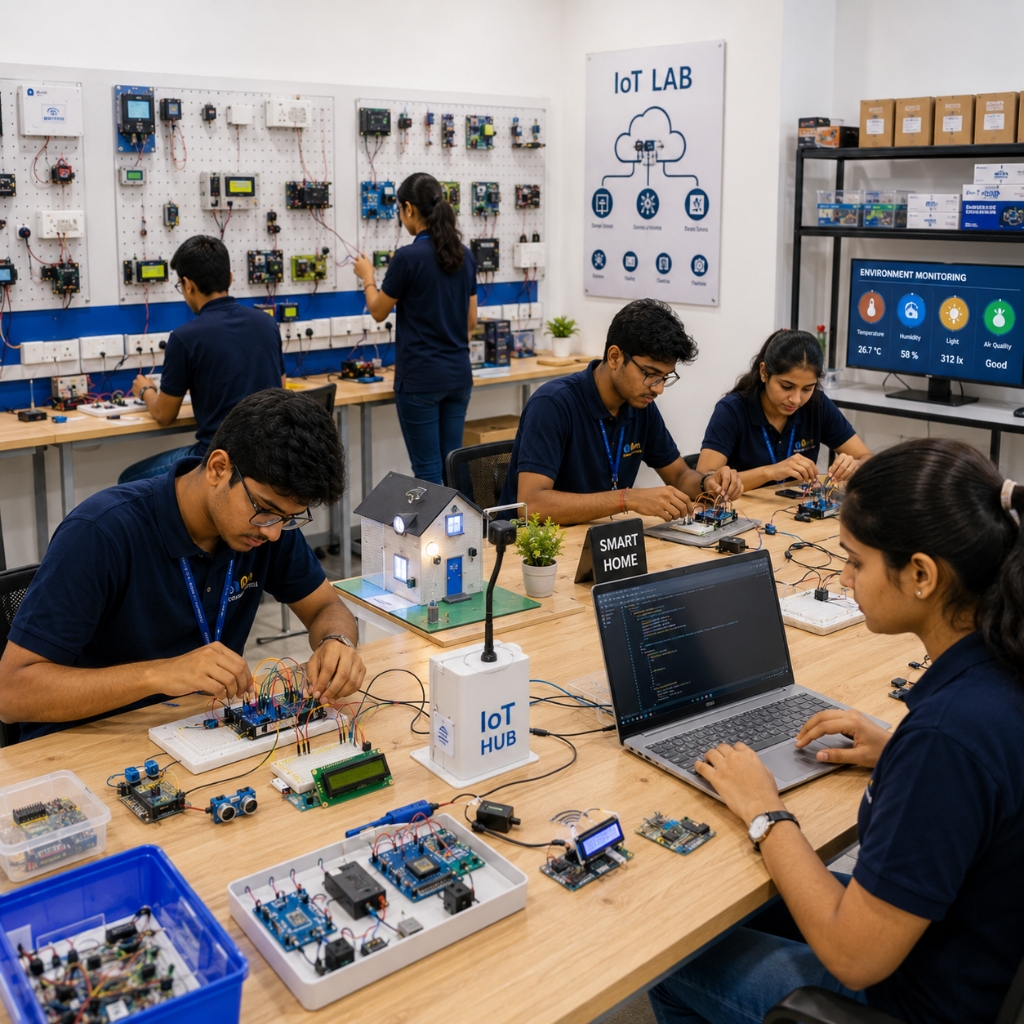
Smart Devices
Build & Code
IoT Lab Requirements
Comprehensive guidelines and mandatory requirements for setting up and operating an IoT Lab.
Lab Infrastructure
According to guidelines, IoT Labs require a minimum dedicated space of 500 sq. ft.
- Spacious environment for safe hardware assembly, networking setup, and testing.
- High-speed Wi-Fi and ethernet connectivity across the lab.
- Proper furnishing, antistatic workstations, and smart displays.
- Secure storage for sensitive microcontrollers and sensor modules.
Operational Requirements
Requirements extend beyond physical space. IoT Labs are meant to foster smart tech innovation.
- Requires clear vision, implementation plan, and faculty training in embedded systems.
- Must organize IoT prototyping workshops, hackathons, and industry visits.
- Institutional commitment to integrate smart technologies into the curriculum.
- Ensure safety compliance for electrical testing and device networking.
Product & Equipment
Comprehensive inventory designed to deeply support IoT education and smart projects.
- Microcontrollers: Raspberry Pi, Arduino, ESP32, NodeMCU.
- Sensors & Actuators: Temp, humidity, motion sensors, relays, motors.
- Networking: LoRaWAN gateways, Zigbee modules, RFID/NFC readers.
- Mandatory List: Soldering stations, multimeters, breadboards, jumper wires.
Events We Support
By integrating the IoT Lab into your institution, you are not just enhancing the educational experience of your students; you are bringing Hands-on learning in smart technologies and preparing them to be the innovators and problem solvers of tomorrow.
IoT Prototyping Workshops
Hands-on hardware prototyping.
Smart City Bootcamps
Build connected urban solutions.
Sensor Integration Training
Master sensor data collection.
IoT Industry Internships
Real-world smart tech experience.
Faculty Development in IoT
Empowering educators with smart tools.
Embedded Systems Courses
Deep dive into microcontrollers.
Smart Tech Showcases
Showcasing student IoT projects.
School Outreach Programs
Educating schools on smart tech.